↳ System / unfinished
A OFICINA — ORQUESTRAR, NÃO ENTREGAR
The machine invents nothing from nothing: it starts from my own strokes. The work is not the request — it is the conversation, the loop and the orchestration.
↳ System / unfinished
The machine invents nothing from nothing: it starts from my own strokes. The work is not the request — it is the conversation, the loop and the orchestration.
First let’s clear up the misunderstanding, because it is the most common and the laziest one: the machine invents nothing from nothing.
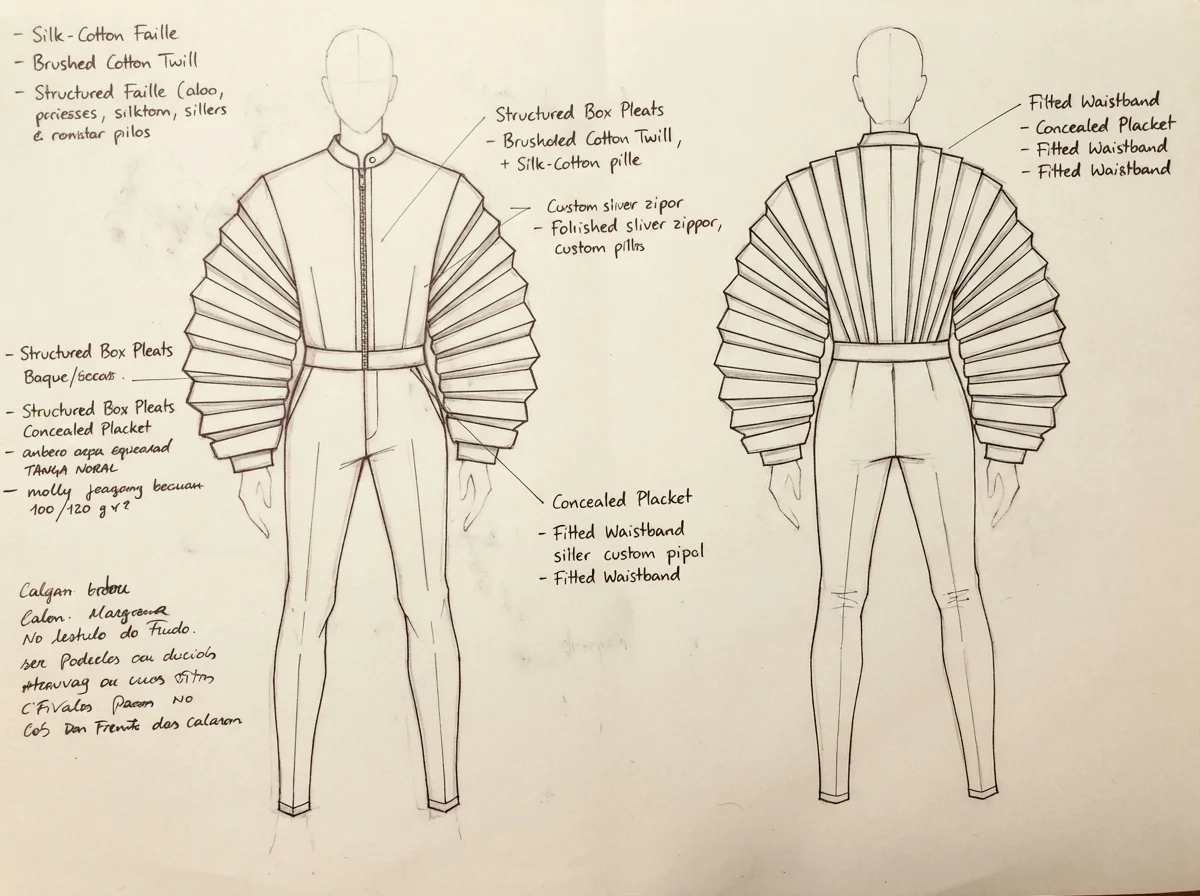
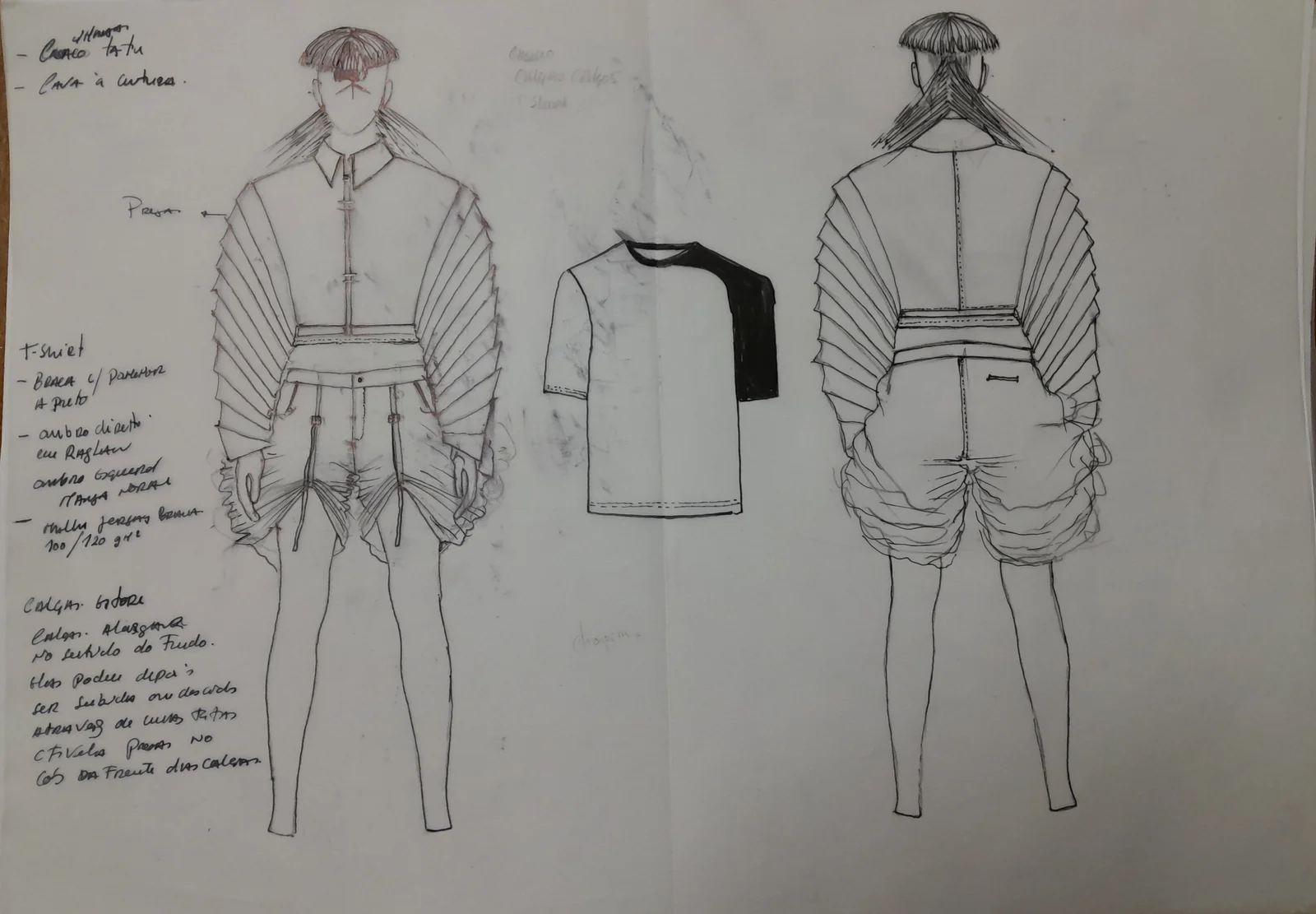
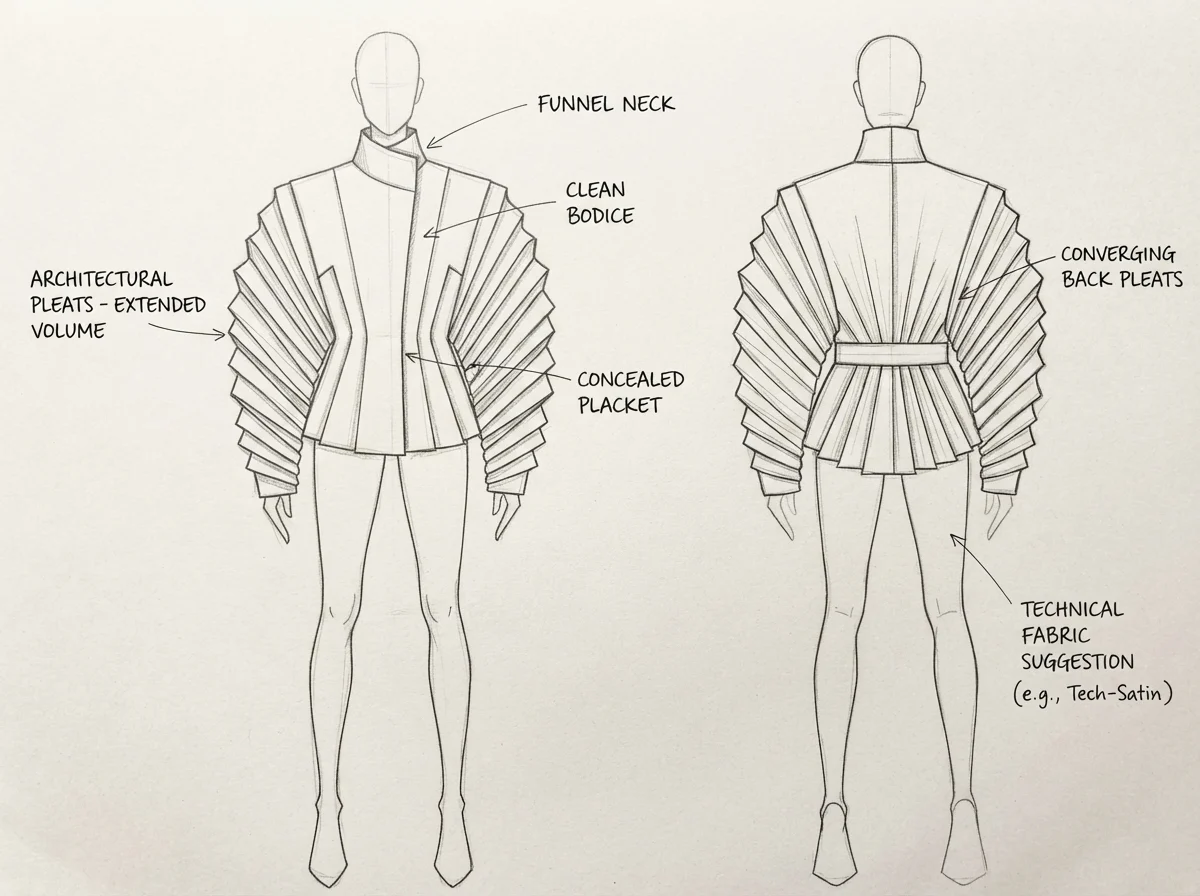
The drawing that opens this entry did not come out of a written request to a generic model. It came out of a base model with a LoRA trained on top — a small adapter, a few megabytes of weights, that pushes the model towards a specific visual vocabulary. Mine. My strokes, my decisions, my proportions. The second image is the croquis drawn by hand on 27 April 2025, made with no machine at all. Everything starts there. The machine completes; it does not conceive.
There are several ways to do this and they are not equivalent. Roughly, in order of fidelity and of cost:
img2img, structural conditioning). It obeys the silhouette now. It costs a good reference and more iterations.Where you stop depends on what you want. A quick study to settle a proportion does not need level 3. A technical croquis going into the Archive does. It all depends — and anyone who tells you there is a single answer is selling you something.
The real cycle is this: you write, you run, you look, you correct, you run again. You generate a batch, you keep one. The metric that matters is not the quality of the best image — it is the keep rate of the batch, because that is what tells you whether the problem is in the model or in what I wrote.
And almost always it is in what I wrote.
It is the same as a fitting: you put it on, you see what pulls, you mark it with a pin, you sew it again. Except the pin is a line of text and the fitting costs seconds instead of an afternoon. This is orchestration — sequence, versioning, selection, repetition — and this is where the work lives. Handing the problem to the machine and accepting the first result is not using the tool: it is signing your name under whatever it returned.
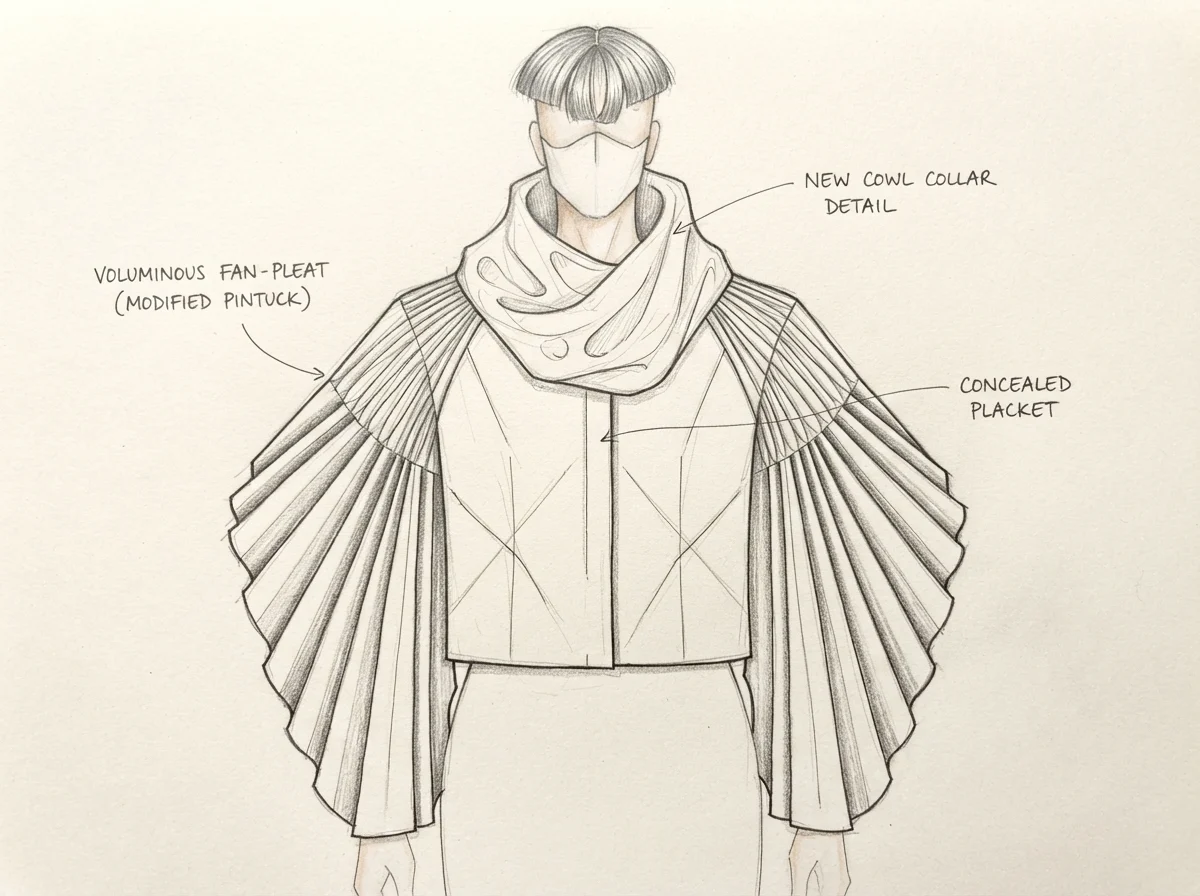
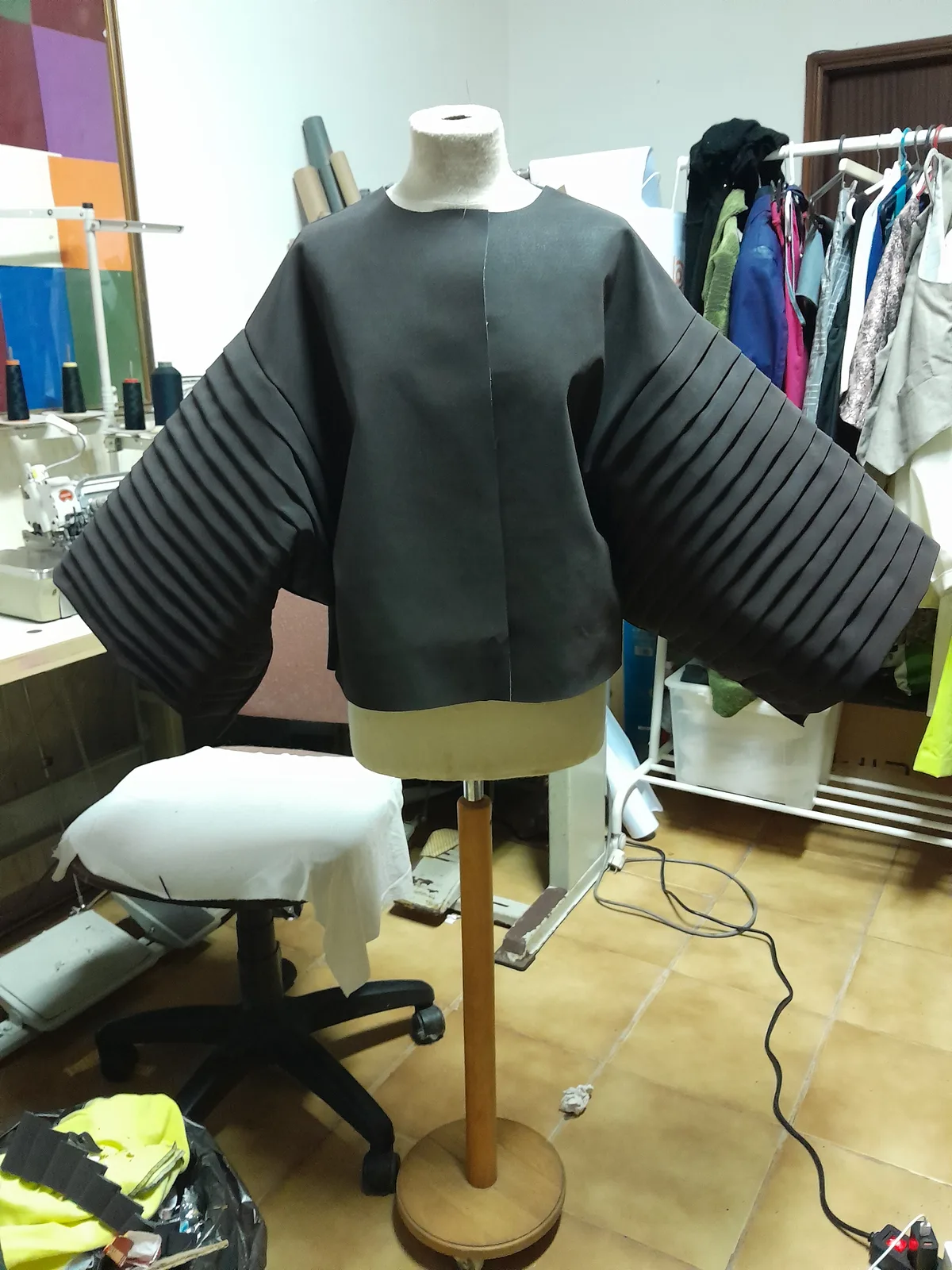
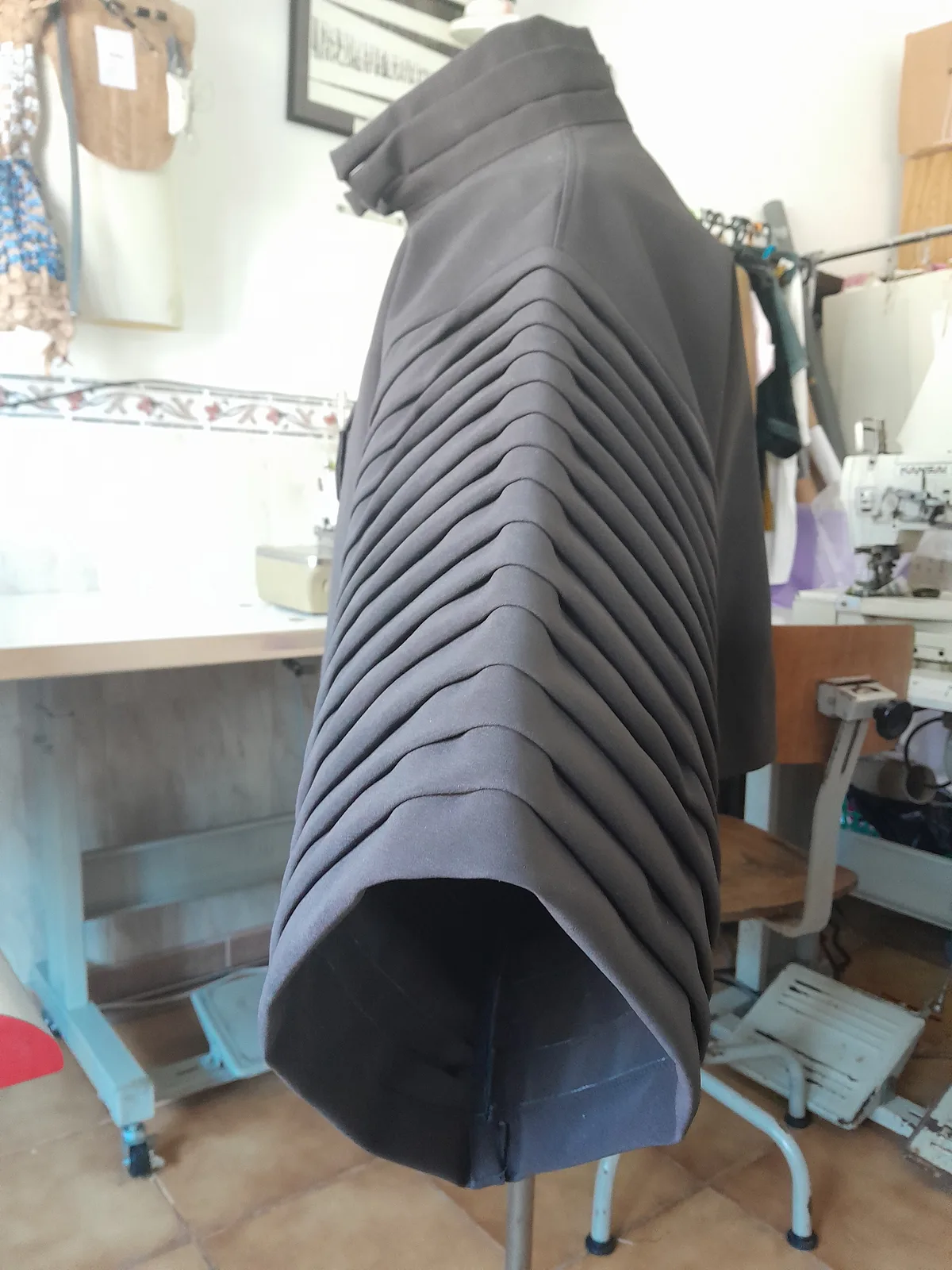
In almost every drawing the pleats come out drawn as cloth: they fall, they drape, they obey gravity. The real piece does the opposite — the laminae stay taut and the cuff holds a 30 cm tunnel open, as the last two images show.
The model is not wrong by accident. It has seen a million pleats and none of them were rigid, so it draws the effect it knows. The cause sits outside the image: the material is a thick synthetic of the kind used in leather goods, not a garment textile. That cannot be inferred from a pixel — it is in the technical sheet, written by someone who was in the atelier.
Which is why the LoRA solves half the problem and the other half stays mine.
A generic model returns a generic result. That is not a defect — it is the definition: a model trained on everything returns the average of everything. If a brand wants to produce imagery nobody else can produce, it has to feed its own model its own identity. There is no shortcut: the material is the dataset, the dataset is the archive, and the archive is built by working.
Which tools, which models, which parameters — that stays in here. Not out of mystery: because it is the part that gets copied in a minute and took months to tune.
One last note on cost, so this doesn’t end up too pretty. Half of this workshop runs locally — offline, no subscription, nothing leaves this machine. The other half runs in the cloud because today it is better, and that means it belongs to somebody else. You choose case by case, and you say which one it was.